
When Promotional Merchandise Earns a Place in Everyday Life
Promotional merchandise works best when it earns a real role in everyday life. Research shows usefulness matters — but so does avoiding one more duplicate.
Promotional merchandise has been part of marketing for decades, and many familiar formats remain popular for a simple reason: they work. Pens, notebooks, drinkware, bags and clothing all solve real everyday needs.
The challenge begins somewhere else. A useful product can still arrive in a category the recipient already knows very well — and may already own in quantity.
That distinction matters. The question is not whether traditional merchandise is good or bad. It is whether a new item can earn a place in a life that is already full of objects doing similar jobs.
The problem is not merchandise. It is repetition.
PPAI Research surveyed more than 3,400 U.S. consumers in 2026 and found that nearly 90% keep branded merchandise either regularly or occasionally. Usefulness was the strongest reason for keeping it: 55% said daily usefulness was the main reason an item stayed with them.
But the same research revealed another important pressure point. Among the reasons people discard or give away branded merchandise, 23.9% said they simply had too many similar items.
That number captures a problem that is easy to understand without blaming any product category. Successful promotional formats become familiar precisely because they are useful. Over time, however, familiarity can turn into duplication.
A person may already have several branded pens, multiple notebooks, spare tote bags or more drinkware than they actively use. A new item is no longer competing only for attention. It is competing with objects the recipient already owns.
Familiar products can still work extremely well
It would be wrong to conclude that conventional merchandise has stopped working. ASI's 2026 Ad Impressions Study found that 88% of consumers would keep a promotional writing instrument because it is useful, and 64% said they would use one every day.
That is a strong result. It also makes the real design question clearer: if usefulness is already expected, what gives one more promotional object a distinct role?
A product does not need to be revolutionary. But it does need a reason to exist alongside everything the recipient already has.
Small objects face a stricter test
The smaller and more personal the storage space, the more selective it becomes.
A desk drawer can absorb another pen. A cupboard can hold another mug. A bag can carry objects that may or may not be used that day. A wallet is different: its space is limited, and every additional object has to justify the space it occupies.
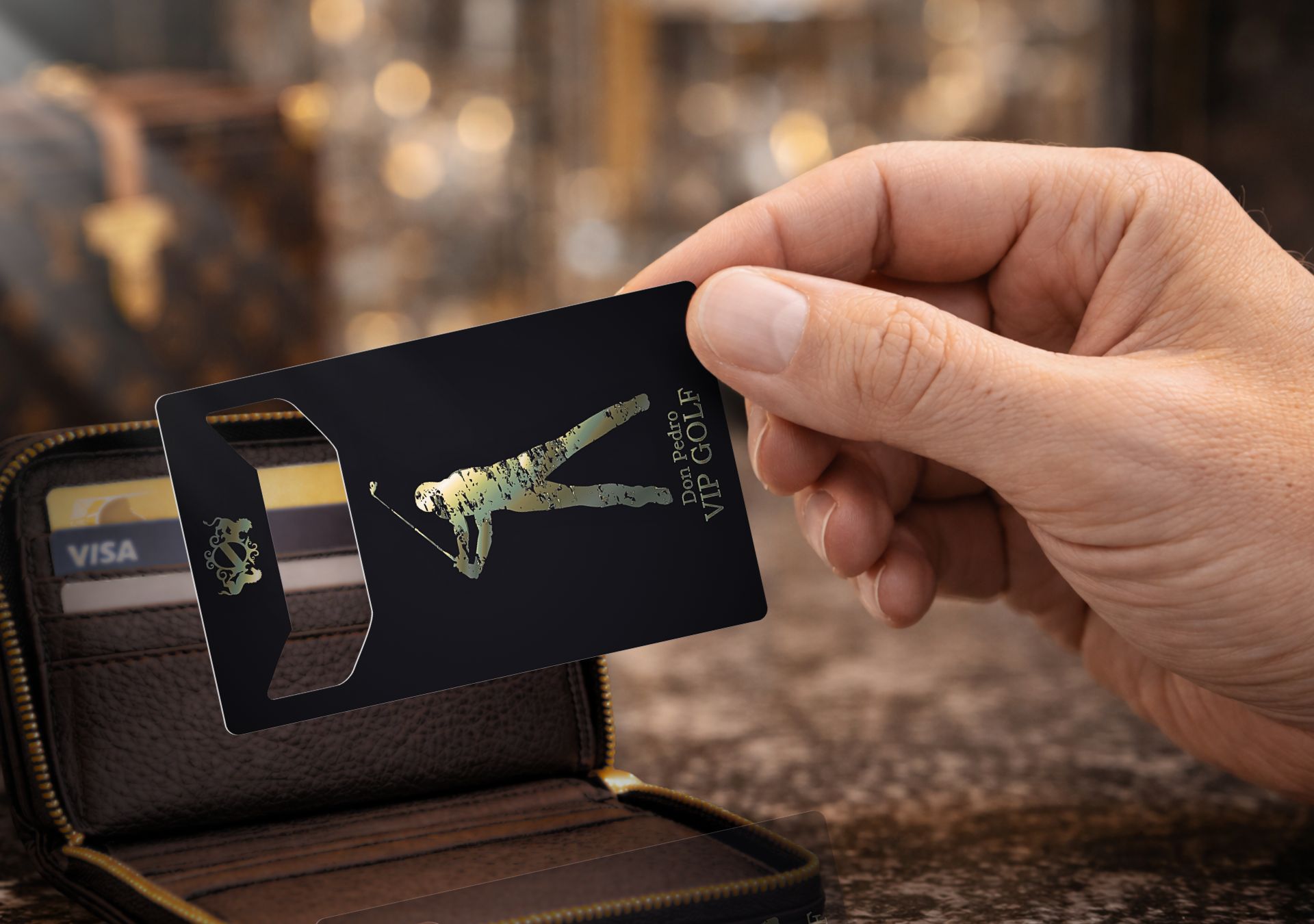
That makes the credit-card format interesting from a design perspective. People already understand where a card-shaped object belongs. It fits into an existing physical habit without requiring a new storage decision.
The form itself quietly suggests what to do with it: put it in the wallet and keep it available.
A promotional object can wait until it is needed
Holdercard uses that familiar format for a second function. When flat, it is approximately the size of a bank card and can stay in a wallet. When needed, it folds into a stand for a smartphone.
That changes the rhythm of use. It does not need to sit permanently on a desk or demand attention every day. It can remain almost invisible until there is a reason to use it.
For the brand printed on the surface, that creates a different kind of presence. The logo, contact details or campaign message stay close to objects people already consider worth carrying — bank cards, identification and other everyday essentials.
The important point is not that a wallet is a magical advertising space. It is that retention becomes easier when the object fits an existing habit instead of asking the recipient to create a new one.
The real competition is for a place in everyday life
Research increasingly treats usefulness as the baseline for successful promotional merchandise. ASI reported in 2026 that 78% of U.S. consumers would keep a promotional item because it is useful. PPAI reached a similar conclusion: usefulness is not simply an advantage — it is the entry point.
Once usefulness is established, the next question is differentiation. Does the object have its own role, or is it one more version of something already owned?
That is where format, size and storage behavior become part of promotional design.
The most durable branded object may not be the biggest, the most expensive or the most visible at the moment it is handed out. It may simply be the one that finds a natural place to stay — and still has a reason to be used later.
Sources
PPAI Research — The Things We Don’t Throw Away (2026)
ASI — 2026 Ad Impressions Study: 5 Compelling Takeaways