
QR Code Business Cards vs NFC: What Happens After the Scan?
QR code business cards are cheap, scalable and easy to use. But what happens after the scan? Compare QR, NFC, paper and plastic cards — and discover why functionality can keep a brand visible for longer.
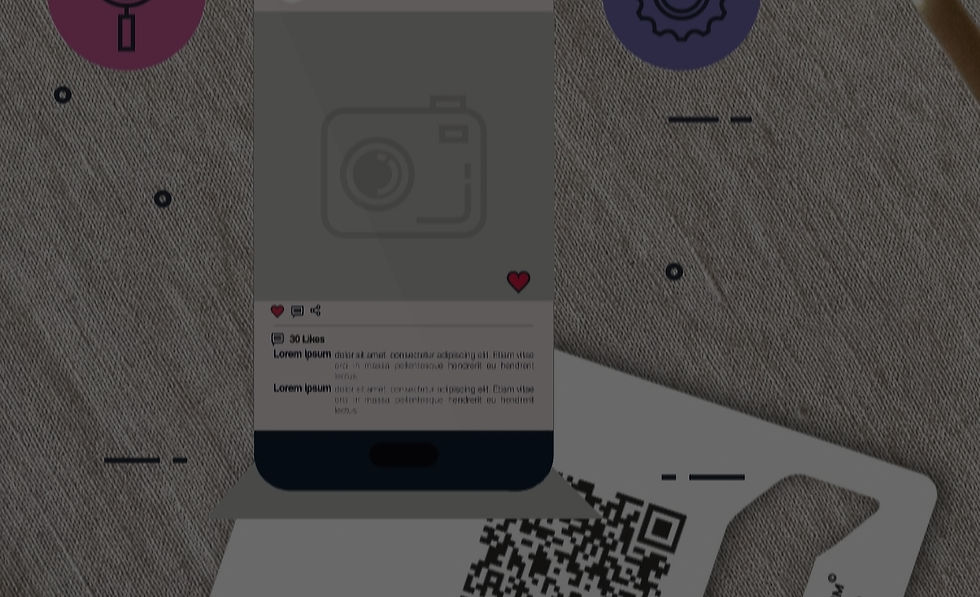
A QR code on a business card is no longer unusual. Companies use it to send people to a website, catalogue, booking page, WhatsApp, digital profile, campaign landing page or contact form with a single scan.
That is useful. But there is a second question that matters just as much for marketing: what happens to the physical card after the QR code has been scanned?
That question is becoming more important as businesses compare QR code business cards, NFC business cards, plastic cards and digital business cards. The technology may change how quickly someone reaches your online content, but it does not automatically give them a reason to keep the physical object.
Why put a QR code on a business card?
The main advantage is simplicity. A printed QR code can connect a physical card to almost any digital destination without requiring an electronic component inside the card.
It can lead to a company website, product page, online catalogue, contact form, social profile, digital business card, event page or special offer. For trade shows, hospitality, retail and sales teams, that creates a direct bridge between an offline interaction and an online next step.
A QR code is also flexible. The card itself can remain simple while the destination page contains far more information than could ever fit on a small printed surface.
Paper business cards with QR codes
Paper remains the lowest-cost and most familiar format for business cards. Adding a QR code is straightforward, and for high-volume contact distribution it can be perfectly adequate.
The limitation appears after the scan. Once the recipient has visited the page or saved the contact details, the paper card may have completed its job.
If there is no second reason to keep it, the advertising life of the card can be very short even if the QR code worked perfectly.
Plastic business cards with QR codes
Plastic cards solve a different problem: durability. They are better suited to moisture, frequent handling and repeated use than ordinary paper cards. That is why similar formats are widely used for loyalty cards, hotel cards, membership cards and promotional cards.
For a deeper comparison of the materials themselves, see our guide to plastic business cards vs paper business cards.
But a more durable card is not automatically a more effective advertisement. If the recipient has no need for it after the QR code is scanned, longer material life does not necessarily create longer brand exposure.
QR code or NFC business card?
NFC business cards use an embedded chip. A compatible smartphone can open a programmed destination when the card is brought close to the device. QR cards achieve a similar digital hand-off through the camera.
For a single salesperson or a small team, NFC can be convenient. The cost of the embedded component may be relatively unimportant when only a few cards are required.
For a campaign involving 1,000, 5,000 or 10,000 cards, however, unit cost matters much more. A QR code is simply printed as part of the artwork, so it scales particularly well for exhibitions, retail promotions, hospitality campaigns and other high-volume uses.
There is also a practical advantage: the same printed card can display the web address or campaign message alongside the QR code, giving the recipient more than one way to act.
The real question is what the card does after the scan
Consider the customer journey. Someone receives a card, notices the brand, scans the QR code and opens the destination page.
At that point the digital action has succeeded. But the physical object still exists.
Does it go into a wallet? A desk drawer? A recycling bin? Or can it continue to perform a useful function?
This is where a business card can move beyond being only a carrier of information.
Can a QR code business card also be a useful promotional product?
Holdercard was designed around exactly this idea.
In its flat form, Holdercard is a compact printed plastic card. A company can add branding, contact details, a campaign message and a QR code just as it would on a conventional promotional or business card.
After the QR code has been scanned, however, the card can be folded into a smartphone stand.
The digital function and the physical function therefore do different jobs. The QR code creates the immediate online connection. The product itself gives the recipient a reason to keep the branded object afterwards.
Why this matters at exhibitions and events
Trade shows are a good example because businesses often distribute thousands of cards and promotional items in a short period.
A QR code can direct visitors to a product page, enquiry form, catalogue or exhibition-specific landing page without forcing them to carry a large printed brochure.
But if the card itself remains useful after the event, the brand has another opportunity for visibility. Instead of disappearing into a pile of event literature, it can move onto a desk and continue to be seen during everyday smartphone use.
QR business cards and cost at scale
Technology becomes much more interesting when quantity is considered.
A feature that adds only a small amount to one card can add hundreds or thousands of euros to a large campaign. That is why printed QR codes are attractive for volume: the code is part of the artwork rather than a separate electronic component.
For companies buying promotional products in bulk, the relevant question is not only “What can this card do?” but also “What does that function cost across the entire campaign?”
A simple printed QR code gives the card a digital gateway without significantly complicating production. Adding a physical use to the card can then extend its value without requiring the card to become an electronic device.
What should you choose?
Choose a paper QR business card when the main priority is low-cost contact distribution.
Choose a durable plastic card when the item needs to survive repeated handling or remain in circulation for longer.
Consider NFC when a small number of reusable personal cards are needed and tap-to-open convenience is the priority.
And if you need a high-volume branded card that connects to digital content and gives people a reason to keep the physical object, a functional promotional card is worth considering.
Frequently asked questions
Can you put a QR code on a business card?
Yes. A QR code can be printed on paper or plastic business cards and linked to a website, digital business card, contact page, catalogue, social profile or campaign landing page.
Is a QR code better than NFC for business cards?
It depends on the use case. NFC provides tap-based interaction through an embedded chip, while QR codes are inexpensive to print and particularly practical for large quantities. Many businesses use QR when cost and scalability matter most.
Can a plastic business card have a QR code?
Yes. Plastic cards can be printed with QR codes just like paper cards, provided the code is large and clear enough to scan reliably.
What is the advantage of a functional QR business card?
A functional card gives the recipient a reason to keep the physical object after the digital action is complete. In the case of Holdercard, the printed card folds into a smartphone stand.
A QR code opens the door. The product decides what happens next.
QR technology is excellent at moving people from print to digital content. But successful brand visibility does not end when the page opens.
The stronger question is what happens to the physical advertising object afterwards.
If it can remain useful, the card has an opportunity to keep working long after the first scan.